Capital seeks to strengthen role as regional growth hub
VGP - Ha Noi is stepping up efforts to shift from development confined by administrative boundaries to a regional approach that promotes connectivity, resource sharing and sustainable growth, in line with the Politburo’s Resolution No. 27-NQ/TW on regional development and the organization of national development space for the new period.
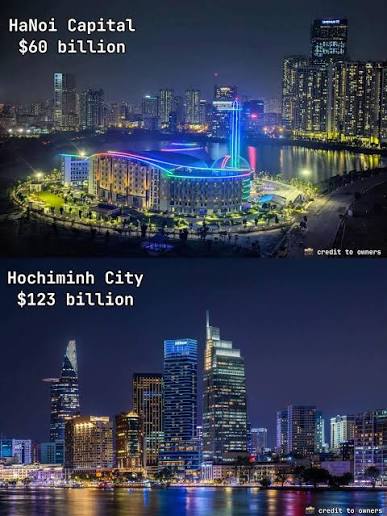
The resolution identifies the Ha Noi and Ho Chi Minh City metropolitan areas as the country's two largest growth poles, underscoring the need for the capital to strengthen its role as a regional connectivity hub and generate spillover growth through closer cooperation with neighboring localities.
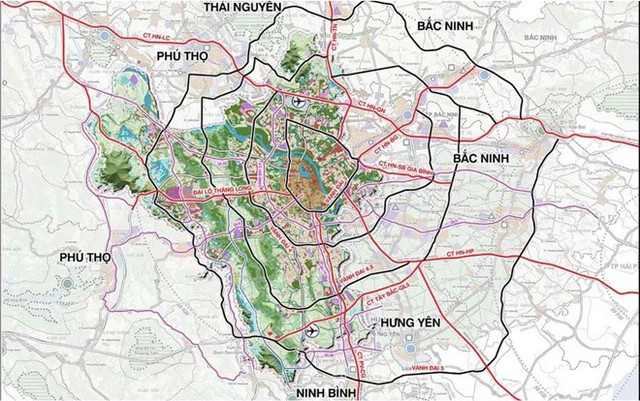
The Ha Noi Capital Master Plan with a 100-year vision also expands connectivity with five localities — Phu Tho, Thai Nguyen, Bac Ninh, Hung Yen and Ninh Binh
Reorganising development space, strengthening regional connectivity
Issued on August 28, 2026, Resolution No. 27 calls for stronger linkages in infrastructure, economic development, science and technology, and resource mobilization between Ha Noi and other localities.
This orientation is further reflected in the 2026 Capital Law, which positions Ha Noi as the core and connectivity hub driving development across the Capital Region, the Red River Delta, the northern midland and mountainous region, and the country as a whole.
The Ha Noi Capital Master Plan with a 100-year vision also expands connectivity with five localities — Phu Tho, Thai Nguyen, Bac Ninh, Hung Yen and Ninh Binh — while strengthening links with national and international economic regions and corridors.
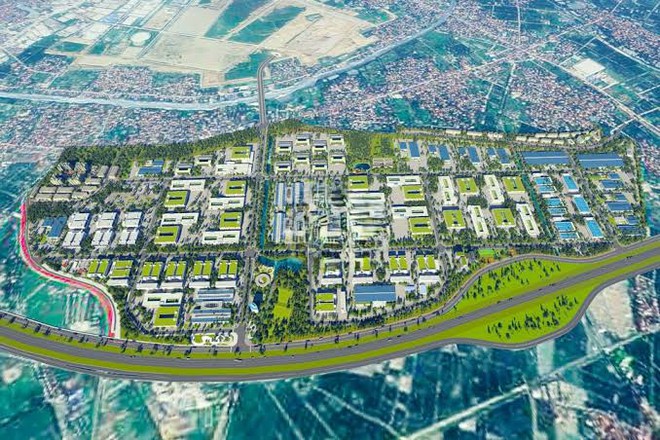
To realize these goals, Ha Noi is prioritizing the development of synchronized, modern infrastructure integrated with the wider region. Key priorities include the Lao Cai–Ha Noi–Hai Phong–Quang Ninh economic corridor, transport routes connecting the capital with neighboring localities, Ring Roads No. 4 and No. 5 of the Capital Region, and railway lines linking seaports, international border gates and urban rail networks.
A well-connected interregional transport network would help ease congestion in Ha Noi's inner-city areas, expand markets, reduce logistics costs and open up new spaces for production and services. Cooperation also needs to extend to industry, agriculture, environmental protection, water resource management, human resource training and essential services, based on the shared interests of the region.
Leveraging science and technology to develop regional value chains
Beyond geographical expansion, Ha Noi's development will increasingly depend on science and technology, innovation and digital transformation.
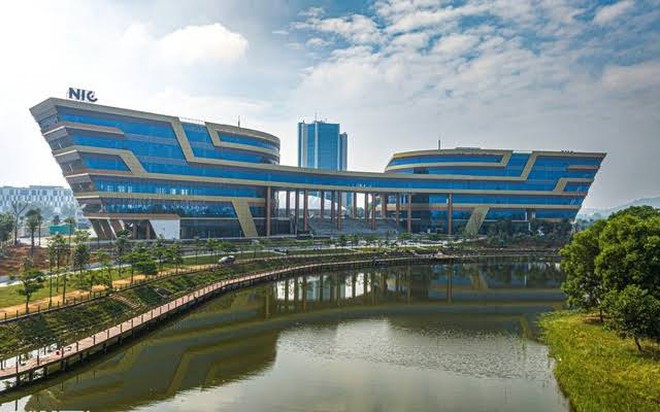
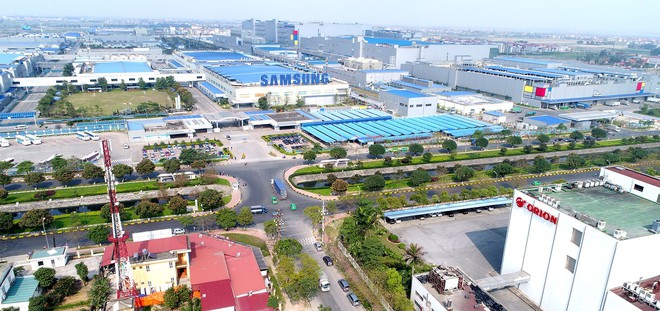
With its network of universities, research institutes and technology enterprises, highly skilled workforce and large consumer market, the capital is well positioned to serve as a regional center for research, technology transfer and high-quality services.
Realizing this potential, however, requires closer links between research and training institutions and the production and business needs of neighboring localities. Ha Noi's research centers and technology enterprises can work with production facilities, industrial parks, raw material production areas and logistics hubs in neighboring provinces to develop interregional value chains.
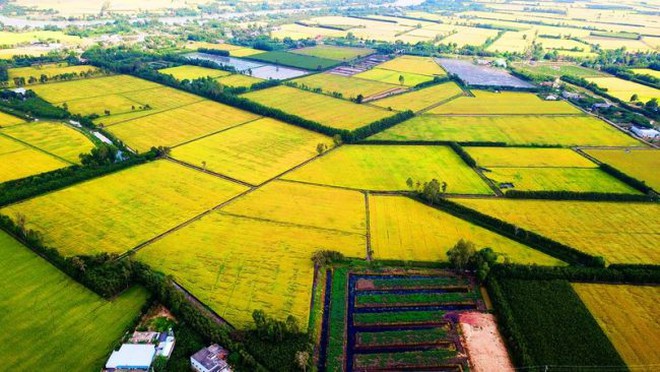
Speaking at an investment networking conference on strengthening regional linkages for smart agriculture and green economy development between Ha Noi, Bac Ninh and Hung Yen on July 15, Le Trung Hieu, Deputy Director of the Ha Noi Department of Finance, said that combining the capital's strengths in science and technology, finance and markets with Bac Ninh's high-tech industries and logistics and Hung Yen's high-quality agriculture and processing industries would create favorable conditions for developing interregional value chains.
From the business perspective, Tran Van Tam, Director of Viet Thang Investment Trade Co. Ltd., based in Ha Noi's Soc Son commune, said that expanding development space and strengthening regional connectivity would create more opportunities for capital-based businesses to expand their markets, seek partners and participate more deeply in supply chains linking Ha Noi with neighboring provinces and cities.
He stressed the need to accelerate the development of transport infrastructure, particularly ring roads, expressways and logistics centres, to ensure businesses can benefit from regional cooperation. Information sharing on planning and investment policies should also be enhanced to facilitate business expansion, production, trade and the movement of goods, he added.
Stronger regional cooperation is also important to achieving Ha Noi's economic targets for 2026–2030, including average gross regional domestic product (GRDP) growth of at least 11% annually and a digital economy accounting for 40% of GRDP in terms of value added.
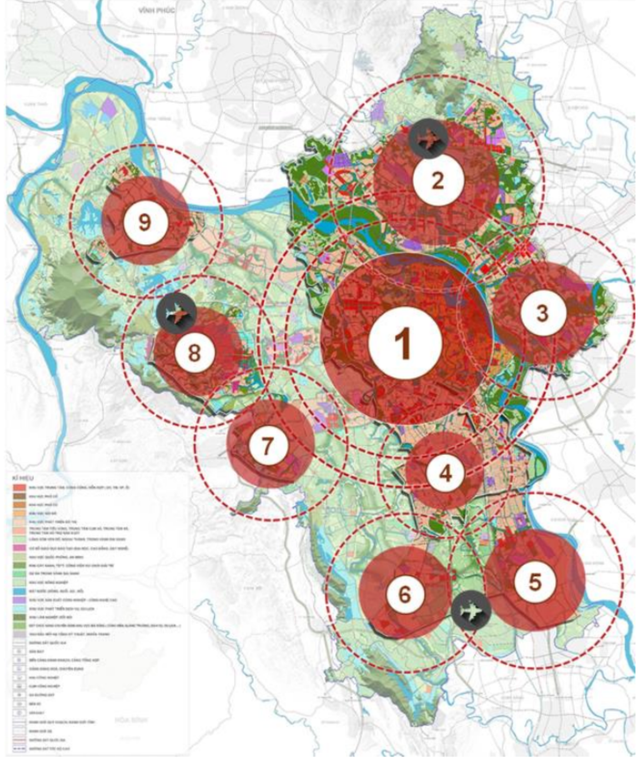
A central pillar of the Master Plan is the establishment of nine growth poles, which will serve as the primary drivers for the Capital’s spatial and economic transformation: the Central Urban Area (right bank of the Red River); the Northern Pole (Dong Anh – Me Linh – Soc Son); the Eastern Pole (Gia Lam – Long Bien); the Southern Pole – Central Urban (Thuong Tin – Phu Xuyen); the Southern Van Dinh – Dai Nghia Pole; the Southwestern Pole (Xuan Mai – Chuong My); the Western Pole (Hoa Lac); the Northwestern Pole (Son Tay – Ba Vi); and the Red River Pole.
Turning regional cooperation into concrete results
To translate Resolution No. 27 into practice, regional cooperation must be backed by specific programs, projects and effective coordination mechanisms.
Many of Ha Noi's challenges, including traffic congestion, air pollution, water resource management, waste treatment, logistics and labor market development, cannot be effectively addressed through solutions confined to the capital's administrative boundaries.
According to leaders of the Ha Noi People's Committee, the city will concentrate on mobilising and making efficient use of all resources while fully leveraging the new mechanisms and policies provided under the 2026 Law on the Capital to create breakthroughs in development. The immediate priority will be to accelerate public investment disbursement and strive to achieve the highest possible implementation rate under the 2026 plan, regarding it as the key driver of growth, social investment, and job creation.
At the same time, the city will focus on comprehensively resolving bottlenecks relating to site clearance, planning, and investment procedures; completing investment preparation and land clearance to enable the simultaneous implementation of strategic infrastructure projects, including national highways, ring roads, bridges spanning the Red River, railway projects, multi-purpose facilities, new urban development areas, and social housing projects.
One of the key requirements set by the Ha Noi People's Committee is to reform its approach to governance by shifting from a "plan management" mindset to a "growth management" mindset. Under this approach, each department, sector, commune, and ward must develop specific growth scenarios for its respective sector or locality, quantify its contribution to the city's GRDP, and assess the efficiency of investment resources through the added value generated for the economy.
Vice Chairman of the Ha Noi People's Committee Nguyen Xuan Luu said that every delayed project and every task that is prolonged is not merely an administrative issue but directly affects the city's growth rate. Therefore, from now until the end of the year, the People's Committee will continue to operate on the principles of assigning specific targets, specific deadlines, and specific responsibilities; conducting concrete performance reviews; and using growth outcomes as the benchmark for evaluating the leadership capacity of agency heads.
At a recent conference on implementing the city's key tasks for the second half of the year, Secretary of the Ha Noi Party Committee Tran Duc Thang instructed the Ha Noi People's Committee and relevant departments to review growth scenarios and accelerate all ongoing work so that the city can achieve its 11 percent growth target in 2026. He also requested the development of scenarios identifying key driving projects to lay the foundation for double-digit growth in 2027 and the years ahead.
Specifically, the city will focus on both immediate and long-term priorities, especially promoting industrial development, the digital economy, the green economy, innovation, and science and technology, while ensuring the substantive implementation of commitments made at the investment promotion conference and the announcement of the Capital Master Plan with a 100-year vision on June 29.
Tran Duc Thang stressed the need to continue vigorously reforming administrative procedures and improving the investment and business environment, ensuring that investors are not discouraged by cumbersome procedures and that harassment is eliminated so as not to undermine the city's investment climate.
Authorities at all levels and across all sectors have been instructed to accelerate public investment disbursement, provide strong support for non-budget investment projects, and assign specific responsibilities to each leader, department, and locality for controlling the critical path of strategic infrastructure projects, covering both public and private investment.
"Our capital is standing before tremendous opportunities and prospects, but these come with equally great responsibilities. We must translate our determination into concrete results, including economic targets achieved, higher incomes, more jobs created, completed infrastructure projects, bottlenecks removed, social welfare policies delivered to the people, and a stronger sense of responsibility and better public service among every official, civil servant, and public employee across the political system," Secretary of the Ha Noi Party Committee Tran Duc Thang said confidently.
The 2026 Capital Law provides a legal basis for strengthening coordination and mobilizing resources for interregional projects. Under Article 29, localities may agree to designate one locality as the lead agency and use its budget to directly invest in projects located in another locality to serve common interests.
The law also provides for the establishment of a Capital Region Development Fund, prioritizing resources for transport infrastructure, environmental pollution control and other regional-level tasks.
Effective implementation will require clear targets, adequate resource allocation and well-defined responsibilities for each participating locality. Data and planning information sharing should be strengthened, infrastructure investment coordinated, and bottlenecks affecting interprovincial projects addressed.
Resolution No. 27, the 2026 Capital Law and the Ha Noi Capital Master Plan with a 100-year vision provide an important foundation for reorganizing the capital's development space through stronger regional linkages and more effective coordination.
By making better use of shared resources, advancing science and technology and strengthening regional value chains, Ha Noi can reinforce its role as a regional growth hub while generating new momentum for development across the wider region and the country as a whole./.