Capital targets to become processed goods export hub
VGP - Ha Noi is poised to become a center for processed goods for export, said Hoang Thi Hoa, Director of the Ha Noi Agriculture Development Center under the Ha Noi Department of Agriculture and Rural Development.
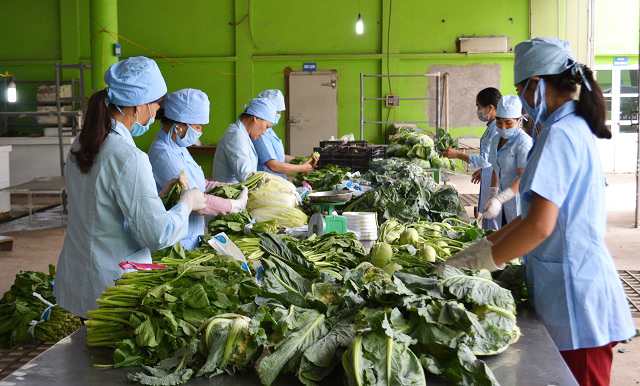
Illustration photo
Ha Noi is building a modern agriculture sector by applying advanced digital technology to create quality products that meet consumer and export needs.
Over the years, Ha Noi has promoted importing several items, including fruits, wood and wood products, and some processed goods.
Specifically, in 2022, Ha Noi's agricultural, forestry, and aquatic exports amounted to US$1.75 billion, of which food agriculture earned US$871 million, up 12.2 percent; wood and wood products reached US$883 million, up 17.5 percent.
Most agricultural exporters in Ha Noi have their factories in the capital and always buy raw materials from other provinces and cities for packaging and export.
Their high-quality agricultural products are exported to other markets, such as late-ripening Dai Thanh lychee to the U.S., Dong Phu organic rice from Chuong My District to Germany, Van Duc vegetables to the RoK, and pink bananas to China.
In addition, Ha Noi has been granted 16 codes for fruit-growing areas, including eight codes for banana-growing areas and another eight for lychee-growing areas.
The city has four packing plants, each with a capacity of 30-50 tons per day.
Ha Noi's agricultural sector is also working with Japan to develop organic rice and banana production models to meet export demand.
However, the city are facing with challenges in producing agricultural productssome localities have failed to implement the Regional Agricultural Production Planning in a proper way. Meanwhile, agricultural production is still small-scale and fragmented. Many areas lack quality assurance under VietGAP, GlobalGAP, and organic standards.
Most agricultural processing enterprises are small and medium-sized, with limited supply and unstable production, and their products have failed to meet market demand. In particular, most agricultural products are not connected to e-commerce channels, and the application of digital technology in agricultural production is still limited.
Raising value of agricultural and forestry exports
The agricultural sector, in cooperation with localities, will focus on building standardized raw material areas as a source of agricultural raw materials to meet export and domestic consumption needs. At the same time, a mechanism for developing human resources to manage cooperatives and enterprises to organize production according to the raw material area plan will be established to strengthen the connection between raw material areas and processing facilities.
The city's agricultural sector has been assisting localities in organizing trade training programs and effective management and operation of the OTAS (Origin Traceability and Authentication) system.
In addition, specialized units of Ha Noi's Department of Agriculture and Rural Development have conducted surveys, evaluated growing areas, collected information, measured and mapped banana growing areas, evaluated files, issued and verified growing area codes, entered growing area data into the OTAS system, created electronic records, tagged products with codes and activated them in the system, and issued code labels.
The city has maintained, developed and integrated an early warning and risk analysis system for food safety into the technology-based network for agricultural and forestry product safety management. It has developed an online system to test and evaluate the food safety knowledge of production and commercial enterprises in agriculture, forestry, and fisheries.
Moreover, Ha Noi will focus on promoting agricultural and food products that meet the four- and five-star certification standards under the One Commune One Product (OCOP) program, building a digital platform and sales channels, and coordinating with departments, sectors, and localities to strengthen training activities, update information on the global market, and help enterprises build their production process according to export standards.
The agricultural sector will also support the establishment of processing and packaging facilities for agricultural and forestry products, building and connecting production areas in provinces and cities to reduce production pressure on Ha Noi./.