
Ha Noi accelerates major flood-control projects ahead of rainy season
VGP - Ha Noi is stepping up the implementation of ten urgent flood-control projects with a combined investment of about VND 5.579 trillion (roughly US$212 million), as part of efforts to strengthen urban drainage capacity before the 2026 rainy season.
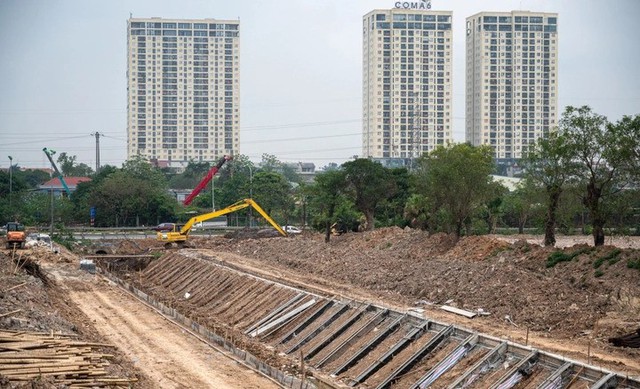
Along Thang Long Boulevard, pumping stations will be upgraded and drainage systems expanded under a VND 163 billion project due for completion in the second quarter of 2026.
The projects focus on expanding large-scale drainage infrastructure, including kilometers of box culverts, retention lakes covering tens of hectares, and upgraded pumping stations across key urban areas.
In the northern and northwestern parts of the city, a VND 262 billion project spanning Resco, Ecohome, Tay Ho Tay, the Diplomatic Corps area, Ciputra, and major districts such as Long Bien, Dong Anh and Gia Lam is slated for completion in the second quarter of 2026.
A key component is a 3.9-kilometre box culvert running from Hoang Minh Thao Street to Vo Chi Cong, discharging into the To Lich River. Scheduled for completion by April 30, the project will replace outdated drainage pipes to help ease chronic flooding.
Another major scheme is the upgrade of the Thuy Phuong canal, valued at VND 869 billion. The project will enhance drainage and help replenish water flow to the To Lich River, with completion expected in the third quarter of 2026. It includes rehabilitation of a 3.6-kilometre canal section and replacement of downstream stretches with nearly 4 kilometers of large box culverts.
Along Thang Long Boulevard, a VND 163 billion project will upgrade pumping stations and expand drainage systems, with completion targeted for the second quarter of 2026.
Meanwhile, several retention lake projects are underway. In Tu Liem Ward, the Phu Do retention lake—worth VND 800 billion—is expected to be completed by the end of this year. Spanning about 31.5 hectares, it will include a high-capacity pumping station linked to surrounding drainage networks, with more than 90 percent of site clearance already completed.
The Me Tri (Dong Bong 2) retention lake project, costing VND 379 billion, will serve western Hanoi. Scheduled for completion by the end of 2026, it will feature a 12-hectare lake and nearly 2 kilometres of embankments.
Yen Nghia 1 retention lake, one of the largest projects with an investment of VND 858 billion, will cover around 20 hectares and is due for completion in the fourth quarter of 2026, alongside a 2.5-kilometre embankment system and control culverts.
River rehabilitation is also part of the plan. A VND 700 billion project will dredge and upgrade the Kim Nguu River, reconnecting it to the To Lich River system and the Yen So pumping station. The work includes constructing over 5 kilometres of embankments and dredging the river to a depth of about 3.6 metres to improve water flow.
In addition, drainage capacity in the To Lich–Ta Nhue basin will be expanded through a VND 590 billion project involving new pumping stations, storage tanks and pipelines, expected to be completed in the second quarter of 2026.
Together, these projects are aimed at reducing flood risks and improving water management across the capital as urbanisation and climate pressures intensify.
In 2025, Ha Noi experienced one of the most severe flooding events in its modern history, exposing deep vulnerabilities in the capital's urban infrastructure and climate resilience. Triggered by prolonged torrential rains and compounded by rapid urbanisation, the floods inundated large parts of the city, disrupting daily life, damaging property, and prompting urgent policy responses.
The flooding was driven by unusually intense and persistent rainfall during the monsoon season, with precipitation levels in some districts far exceeding historical averages. Water levels in key rivers, including the Red River and To Lich River, rose sharply, overwhelming embankments and drainage systems.
Low-lying urban districts such as Hoang Mai, Thanh Xuan, and parts of Cau Giay were among the hardest hit. Streets turned into rivers, with water depths reaching up to half a metre in some areas, paralysing transport and forcing residents to evacuate or remain indoors.
The 2025 flood has become a turning point in Ha Noi's approach to urban planning and climate resilience. Policymakers have since prioritised integrated water management strategies, combining infrastructure upgrades with nature-based solutions such as green spaces and permeable surfaces./.