Ha Noi aims to become Viet Nam’s semiconductor and innovation hub
VGP - Ha Noi is positioning itself to become Viet Nam’s leading center for semiconductors and technological innovation, with experts urging the city to master chip technology, enhance research and development, attract global partners, and train the next generation of engineers.
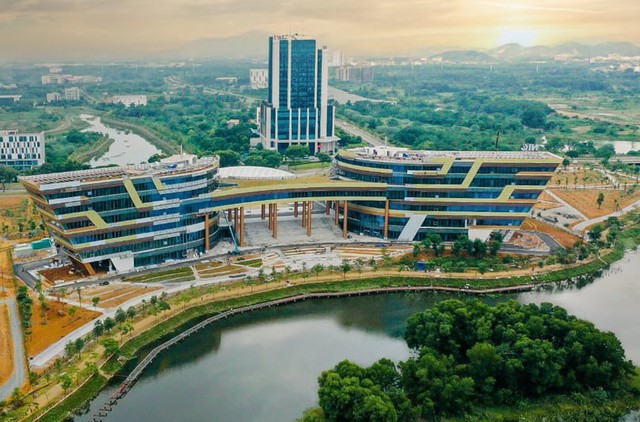
A view of the the National Innovation Center (NIC) at the Hoa Lac Hi-Tech Park
At a seminar on October 22 titled "Positioning in the Global Semiconductor Supply Chain: Criteria, Leading Powers, Viet Nam's Path and Ha Noi's Vision", specialists emphasized that mastering both technology and production is essential for Ha Noito integrate into the global semiconductor value chain and become a hub for innovation and talent development.
Shifting from manufacturing to mastery
Prof. Dr. Tu Trung Chan, Deputy Director of the Asian Institute for Advanced Technology (AIAT), highlighted that Viet Nam must move beyond basic chip manufacturing and focus on mastering every microstructure layer of integrated circuits.
"Our domestic capabilities meet only 50–60 percent of essential requirements. To catch up, we need advances in design, materials, packaging, and testing," he said. Chan proposed the creation of an Intellectual Property (IP) Bank in Ha Noi to store, share, and commercialize chip designs from universities, research institutes, and businesses. "Intellectual property is the foundation of the semiconductor industry. Ha Noi can become a source of new inventions and knowledge," he added.
Ngo Dac Thuan, Chairman of IP Group JSC, recommended developing a national semiconductor technology map to identify capacity gaps across the production chain. He stressed that Viet Nam should leverage its strengths—young talent, open access to technology, and a central location in Southeast Asia—rather than simply follow the models of advanced economies.
Ngo also urged conditional international cooperation, shared laboratories, and integration of IP education into university programs to cultivate a generation of engineers capable of mastering complex semiconductor knowledge. He proposed a training framework dividing focus into 30 percent chip design, 40 percent manufacturing processes, and 30 percent packaging and testing.
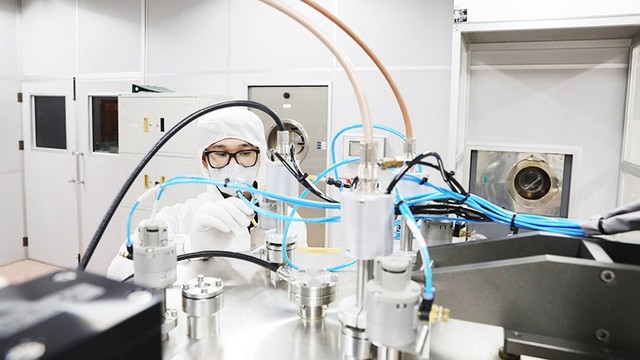
Research on semiconductor chip production at Ha Noi University of Science and Technology - Illustration photo
Seizing golden opportunity
Prof. Dr. Sci. Nong Duc Ke, Director of AIAT, emphasized that every country must secure an irreplaceable role in at least one segment of the semiconductor supply chain. He noted that Ha Noiand Viet Nam now have a "golden opportunity" as major corporations such as Intel, TSMC, Samsung, and Amkor shift production to Southeast Asia.
"The semiconductor industry requires sophisticated technology and massive investment, often tens of billions of dollars. No single locality can do it alone," Ke said. He added that a national strategy, strong investment, and global cooperation are critical for success.
Ha Noi has unique advantages, including technical universities, research institutes, the Hoa Lac Hi-tech Park, and a dynamic innovation ecosystem. "With the right guidance, Ha Noican become Viet Nam's R&D and innovation capital for semiconductors," Ke said.
Viettel Semiconductor Center has spent six years on chip research and design, producing 5G SIM and telecom chips currently undergoing testing. Ha Noi's universities, including Ha Noi University of Science and Technology, University of Engineering and Technology, and FPT University, are essential for cultivating skilled engineers to meet the city's and nation's semiconductor ambitions.
Tran Anh Tuan, Director of Ha Noi's Department of Science and Technology, stressed that mastering core semiconductor technologies, particularly chip design, will drive high-value growth and accelerate Ha Noi's next development phase. "This requires close consultation and collaboration among experts, scientists, and businesses," he said.
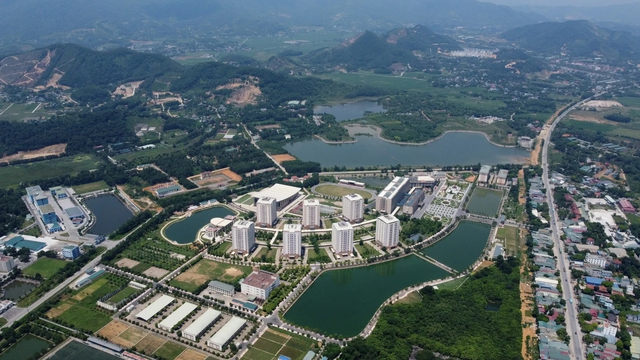
Hoa Lac Hi-tech Park from above
Strategic vision and infrastructure
Ha Noi aims to develop the Hoa Lac Hi-tech Park into Viet Nam's "Silicon Valley," focusing on assembly, packaging, testing (APT), AI research, and IoT chip design for smart agriculture. By 2030, the park is expected to attract total investment of US$10 billion, with 30 percent coming from foreign semiconductor enterprises.
The city currently trains around 5,000 STEM students annually, while the National Center for IC Design, Fabrication and Testing plans to produce 10,000 engineers by 2030 specializing in chip design and manufacturing. However, Ke noted that university programs still fall short of global standards and emphasized the need to build a qualified teaching and research workforce.
To support this, Ha Noi plans to attract 500–1,000 semiconductor experts, engineers, and talents. Thuan added that developing human resources, intellectual property rights, product incubation, and technology transfer are key to establishing a complete semiconductor ecosystem.
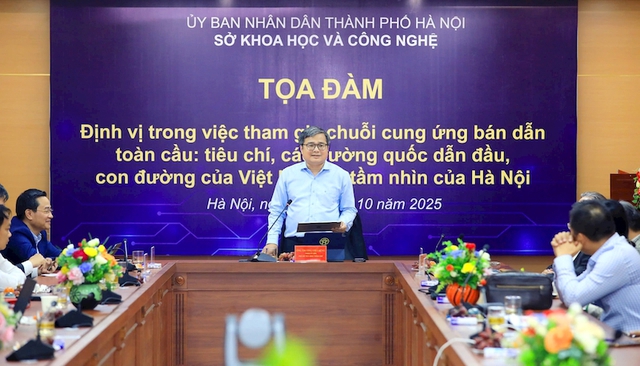
Vice Chairman of the Ha Noi People's Committee Truong Viet Dung
Policy support and innovation approach
Truong Viet Dung, Vice Chairman of the Ha Noi People's Committee, confirmed that Ha Noi has six resolutions promoting science, technology, innovation, and digital transformation. The city allocates 4 percent of its budget to science and technology, above the national average of 3 percent, reflecting its commitment.
Ha Noi plans to establish two national semiconductor industrial centers and is seeking a "chief architect" to design a comprehensive development strategy encompassing policy, talent, and infrastructure. The city is also testing a pilot "sandbox" mechanism to apply flexible and breakthrough policies beyond existing regulations.
"This framework will accelerate Ha Noi's progress in emerging industries, including semiconductors, and strengthen its position as Viet Nam's innovation and technology leader," Truong said.
With strategic planning, international collaboration, and a focus on talent and intellectual property, Ha Noi is poised to become a regional hub for semiconductors and innovation, leading Viet Nam's next era of high-tech growth./.