
Ha Noi mandates household waste sorting
VGP - Ha Noi will require households to separate their waste at source into three categories starting January 8.
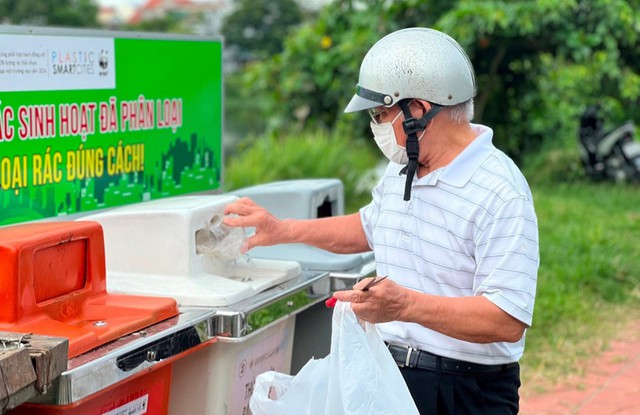
Ha Noi will require households to separate their waste at source into three categories starting January 8, 2026 - Illustration photo
under new regulations that authorize collection companies to refuse unsorted rubbish and lay the groundwork for a future shift toward volume-based disposal fees.
The new rules were issued under Decision 87, signed by Vice Chairman of the municipal People's Committee Nguyen Manh Quyen, marking the city's most significant overhaul of household waste management in more than ten years.
Under the decision, domestic waste must be sorted into recyclable materials, food waste, and hazardous household waste. Waste collection companies are permitted to reject rubbish that is not properly separated or placed in approved containers, and may report violations to local authorities for inspection and penalties.
Recyclables include items such as paper, plastic, wood, rubber, and electrical equipment. Food waste covers leftovers, expired food, and kitchen scraps. Hazardous waste includes used batteries and accumulators, paint and chemical containers, pesticide packaging, and must be stored in waterproof, corrosion-resistant packaging that prevents leakage.
Bulky items such as broken furniture, door frames, and wooden panels are also subject to separate handling and must be transferred to licensed collectors for a fee or delivered by residents to designated collection points free of charge.
The city introduced standardized container colors to support sorting compliance. Food waste must be placed in green bins designed to prevent leaks and reduce odors, while other household waste must go in grey containers. Households must provide their own waste containers.
Residents may sell or hand recyclables directly to recycling operators, store them at home for periodic transfer to designated collection points, or have them collected by municipal waste services. Food waste can be composted, repurposed as animal feed, or collected by authorized operators.
Hazardous waste may be temporarily stored at home or brought to designated collection points according to schedules set by local authorities.
The decision applies not only to households, but also to organizations generating less than 300kg of domestic waste per day, which may choose to follow household waste management procedures.
City officials say the system aims to reduce landfill dependence and increase recycling rates in a city that generates an estimated 7,500 tons of household waste per day.
The Department of Agriculture and Environment has been assigned to develop a new pricing framework for waste collection, transport, and treatment.
At present, waste disposal fees in Hanoi remain flat and low, with urban households paying around VND24,000 (about US$0.9) per month, while rural households pay approximately half that amount./.