Pagodas and temples in Hà Nội
VGP - Hà Nội is the capital, the political, economic, cultural, and tourist centre. Hà Nội is famous 36-streets ancient quarters, rich in historic and cultural vestiges, especially religious architectural projects. Visitors to Hà Nội are opportune not only to see temple of literature, history museum, Ba Đình square, Hoàn Kiếm lake, Hồ Chí Minh mausoleum, fine-arts museum, West lake, ancient quarters but Hà Nội temples and pagodas.
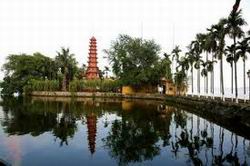
Trấn Quốc pagoda:
 |
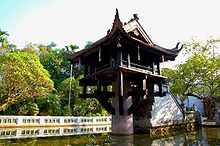
One Pillar Pagoda
 |
Quán Thánh pagoda:
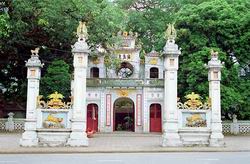 |
The pagoda, well-reputed with a black copper statue, was built in 1010 under king Lý Thái Tổ dynasty by side of road Thanh Niên, close to Trúc Bạch lake dedicated to saint Trấn Vũ. It’s said that the saint helped king An Dương Vương to keep away devils when building Cổ Loa citadel. Originally, the statue was made of wood. In 1677, under king Lê Hy Tôn dynasty, it was made of copper with 3.96m in height, 4 tons heavy, 3.48m in perimeter. The base is 8m. In 1892, it was put on 1.5m high stone base. On the gate door, there are 3 Chinese characters: Trấn Vũ Quan.
Quán Sứ pagoda
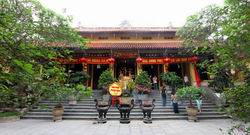 |
It is located in No73 Quán Sứ street, Hoàn Kiếm district, Hà Nội. The pagoda was built in the 15th century under the Lê dynasty. The pagoda was restored many times so it was not ancient as before. The pagoda was entirely renovated in 1942 and it is the biggest pagoda in Hà Nội. Since 1958, a part of the pagoda is head office of Việt Nam Buddhism Association.
Hai Bà Trưng pagoda
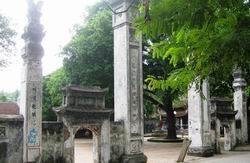 |
The pagoda was built in 1142 under the reign of king Lý Anh Tông to worship two Vietnamese heroines Trưng Trắc and Trưng Nhị in Hương Viên street, Đồng Nhân ward, Hai Bà Trưng district, Hà Nội. There are two fine clay statues of two Trưng heroines with 12 statues of their general -ladies. Every year, a grand festival is held at the pagoda on the 5th and 6th days of the second lunar month to commemorate the two national heroines.
Ngọc Sơn temple
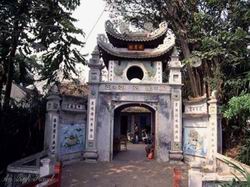 |
It was built on Ngọc (Jade) island in returned sword lake in Trần dynasty (1225-1400). National hero Trần Hưng Đạo and some illustrious writers are worshipped in the temple. Originally, it was a small temple and enlarged time by time. In 1865, Ngọc Sơn temple was renovated the shape which we can see today. A large pen -shaped tower (Tháp Bút) was built at the entrance of the temple. On the Tháp Bút, there are three Chinese characters Tạ Thanh Thiên. Behind Tháp Bút it is Đài Nghiên (Ink Stand). Passing Đài Nghiên, you walk into the temple crossing Thê Húc bridge made of wood.
Religious architectures, temples and pagodas in Hà Nội have enticed great number of tourists to the capital.
By Tuyet Minh