
Revised Capital Law promotes high-tech agriculture linked to environmental protection
VGP - A number of new policy mechanisms have been proposed in the drafting of the revised Capital Law to create greater scope for Ha Noi to develop an ecological, modern, and sustainable agricultural sector.
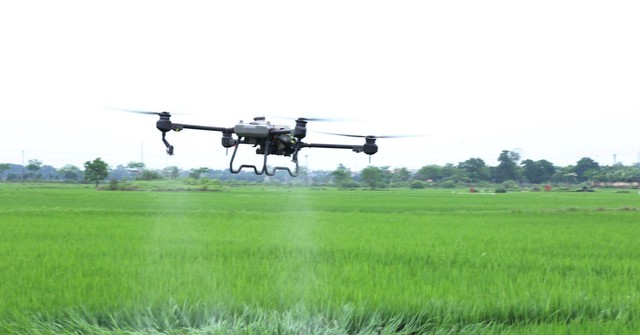
Illustration photo
The proposed provisions aim not only to improve the efficiency of agricultural land use but also to encourage the adoption of high technologies, strengthen environmental protection, and enhance climate change adaptation, in line with the capital city's strategy for developing urban agriculture.
One notable proposal is to authorize the Ha Noi People's Council to regulate the use and exploitation of agricultural land located on riverbanks and alluvial islets along embanked rivers.
Under the proposal, these areas could be used for ecological and high-tech agricultural production while integrating agri-tourism and experiential education activities.
However, any construction on agricultural land must comply with dike planning, flood prevention requirements, and other relevant planning regulations.
The draft law also allows the city to issue detailed regulations on the conditions, procedures, and licensing requirements for construction, as well as the proportion of agricultural land that may be used for facilities directly serving agricultural production.
Such facilities may include agricultural product processing and storage centers, product exhibition and promotion areas, tourism-related landscape infrastructure, and spaces for experiential education within concentrated agricultural production zones.
Notably, the draft introduces a range of incentive mechanisms to attract investment in environmental protection and high-tech agriculture.
Projects applying advanced technologies in environmental protection, climate change adaptation, waste and wastewater treatment, as well as projects developing high-tech agricultural zones or high-tech agricultural production, would be eligible for preferential policies on land, investment, and science and technology.
The draft also lays the foundation for establishing high-tech agricultural zones within Ha Noi's high-tech park system, contributing to higher agricultural value-added and more sustainable agricultural development.
Effective models emerging
Many high-tech and ecological farming models in Ha Noi have already demonstrated strong results. In 2025, the Ha Noi Agricultural Extension Center implemented 14 models across four categories identified for wider replication, with approaches tailored to the characteristics of different localities.
At the same time, the center introduced agricultural production models designed to adapt to climate change, helping protect the environment and improve land-use efficiency.
A number of new crop varieties have also been introduced into production, facilitating more appropriate crop restructuring on paddy fields and other agricultural land.
The city currently has more than 3,000 ha of flower-growing areas, including about 47 large-scale flower production zones covering over 1,800 ha in districts such as Tay Ho, Me Linh, Dan Phuong, Thuong Tin, and Gia Lam. High-quality flower cultivation accounts for over 30 percent of the total area, with several varieties such as orchids, lilies, and chrysanthemums already being exported.
Many high-tech flower farms have adopted automated irrigation systems, light and temperature regulation, and have achieved relatively high productivity. The average production value ranges from 500 million (US$18,900) to VND1.5 billion (US$56,900) per hectare per year, with some models earning up to VND2.2 billion per hectare annually.
The use of smart management systems, greenhouse and net house technologies, and water-saving irrigation helps farmers actively manage production, enhance competitiveness, and meet strict market demands, thereby increasing profits compared with traditional flower cultivation./.