Viet Nam sets an example in heritage conservation and international cooperation
VGP - Jonathan Wallace Baker, UNESCO Representative to Viet Nam, made the statement in an interview with the VGP on the occasion of the closing of the “Asia-Pacific Dialogue on Heritage and Authenticity,” held from September 27 to October 1 in Ha Noi and Ninh Binh.
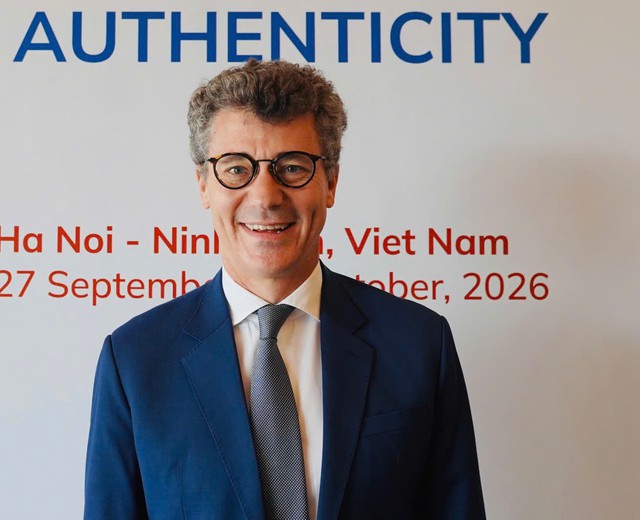
UNESCO Representative to Viet Nam Jonathan Wallace Baker - Photo: VGP/Minh Anh
Speaking comprehensively about the outcomes of the dialogue, the significance of the Ha Noi Outcome Document, and the restoration project of Kinh Thien Palace, Jonathan Wallace Baker said the dialogue had marked an important step forward in Viet Nam–UNESCO relations, with the relationship evolving from one based on support to one founded on partnership, while making a positive contribution to international cultural cooperation.
Successful Ha Noi Dialogue marks new chapter in Viet Nam–UNESCO partnership
Could you assess the outcomes of the "Asia-Pacific Dialogue on Heritage and Authenticity" and Viet Nam's contribution as the host country?
Jonathan Baker: The dialogue brought together a wide range of stakeholders, including representatives of governments, the World Heritage Committee, experts, heritage managers, local communities, and knowledge holders. The event helped connect conservation theory with heritage practices in Ha Noi and Viet Nam more broadly. Holding the dialogue here therefore carried significant practical value.
Viet Nam clearly demonstrated its leadership in the field of culture. Viet Nam–UNESCO relations have developed over many years, evolving from a relationship based on "support" to one based on "partnership." This event is a clear example of that effective partnership.
I would like to congratulate Viet Nam on the success of the dialogue and the adoption of the Ha Noi Outcome Document, which is an important outcome of the event. The document makes a significant contribution to the international discussion on authenticity in the World Heritage system.
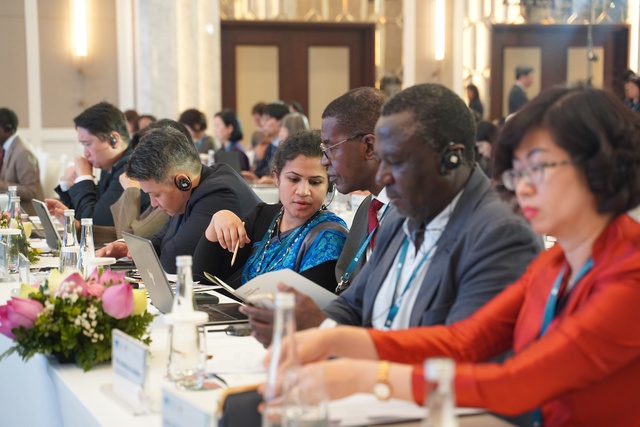
Delegates of the “Asia-Pacific Dialogue on Heritage and Authenticity” - Photo: VGP/Minh Anh
Ha Noi Outcome Document: A new milestone bringing Asia-Pacific perspectives to global standards
What do you consider the most important aspect of the Ha Noi Outcome Document, and what does it mean for recognizing Viet Nam's contribution?
Jonathan Baker: The Ha Noi Outcome Document builds on previous international milestones, beginning with the Nara Document on Authenticity in 1994 and continuing through the Nairobi Document in 2025. It brings the perspectives of the Asia-Pacific region into the global discussion on authenticity, drawing on the region's own cultural contexts and heritage practices.
For Viet Nam, the document directly addresses many core issues, including living heritage, reconstruction, community knowledge, and the relationship between tangible and intangible heritage. The Ha Noi Outcome Document creates a two-way mechanism for exchange: it brings international experience and lessons to Viet Nam while also sharing Viet Nam's good practices with the world.
In terms of context, the Ha Noi Outcome Document comes at a time when World Heritage conservation faces major challenges from climate change, natural disasters, urbanization, and socio-economic development pressures. After decades of implementing the World Heritage Convention, concepts of "authenticity" need to continue evolving to reflect the diversity of cultural contexts.
The document brings together regional experience and Viet Nam's rich heritage practices, including those of the Thang Long Imperial Citadel and Trang An, and focuses on several key directions.
These include providing a reference framework for countries in identifying heritage, preparing Tentative Lists, developing nomination dossiers, and conserving, managing and monitoring heritage; promoting a consistent, inclusive and evidence-based understanding of authenticity that respects local cultural specificities; strengthening requirements concerning Outstanding Universal Value (OUV), integrity, and effective protection and management mechanisms; and contributing to a more balanced, representative and credible World Heritage List.
The Ha Noi Outcome Document provides orientations that can contribute to the practical identification, conservation, management and monitoring of World Heritage. It also emphasizes that tourism and development should support conservation efforts and sustainable livelihoods, while cultural, social and ecological impacts should be monitored over the long term.
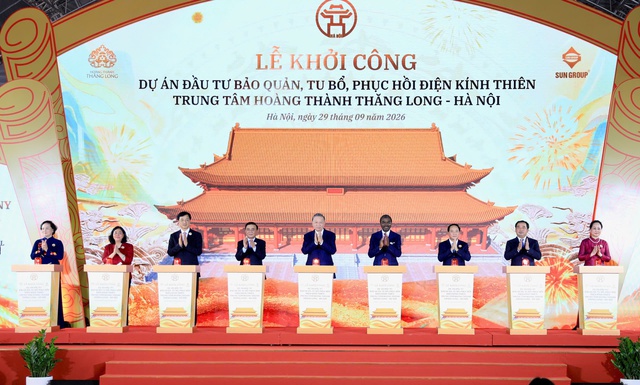
General Secretary and President To Lam (5th from R) at the groundbreaking ceremony for the restoration of Kinh Thien Palace - Photo: VGP/Minh Anh
Restoration of Kinh Thien Palace reflects Viet Nam's commitment to heritage conservation
The groundbreaking ceremony for the restoration of Kinh Thien Palace was eagerly awaited and is of great significance for Viet Nam, Ha Noi and the Thang Long–Ha Noi Heritage Conservation Center. International partners, including UNESCO, have supported this process. Could you share your thoughts on the event?
Jonathan Baker: What impressed me most was the long, systematic process of research, documentation, consultation and dialogue, which was highlighted at the September 29 event attended by General Secretary and President To Lam.
UNESCO and ICOMOS have worked closely with Vietnamese agencies and experts throughout this process. The Thang Long Imperial Citadel is truly a "best practice" in many respects — from its effective cooperation with UNESCO and the World Heritage Committee, and its respect for international institutions, to its serious implementation of all recommendations that have been made.
The Thang Long Imperial Citadel is a heritage site of great significance to Viet Nam, the world and UNESCO. The work being carried out here demonstrates the excellent results that can be achieved when a State Party works closely with UNESCO.
UNESCO highly appreciates the dedication and cooperation of the Vietnamese people, the people of Ha Noi, the management board of the Thang Long Imperial Citadel, as well as the relevant agencies and experts.
Viet Nam is an excellent partner and has taken all recommendations of the World Heritage Committee very seriously. I hope Viet Nam will continue to maintain this serious and scientific approach.
For its part, UNESCO will always stand alongside Viet Nam in heritage conservation through assessment, advice and technical support, helping ensure that the conservation and restoration process is carried out in the most systematic and comprehensive manner possible.
Thank you very much!